
Square (Box) Breathing
Square breathing—also known as box breathing—is a simple, steady breathing pattern designed to calm the nervous system, reduce stress, and bring the body back into balance.
What Is Square Breathing?
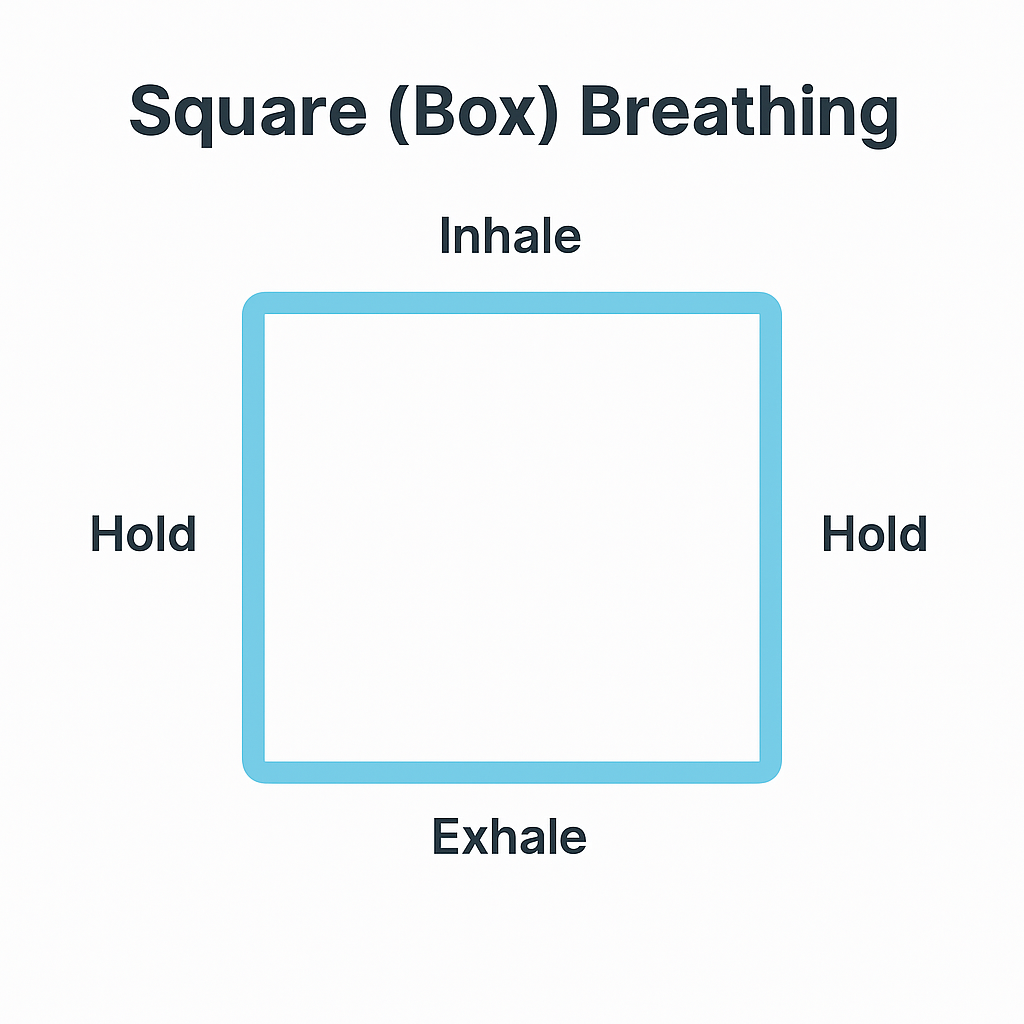
Square breathing uses a four-part pattern where each step is held for an equal count—like tracing the four sides of a square.
This pattern sends signals of safety to the brain, slows the heart rate, and helps settle both body and mind.
The pattern is:
Inhale → Hold → Exhale → Hold
Each for the same amount of time, usually 4 seconds.
Why Square Breathing Works
Square breathing activates the parasympathetic (rest-and-digest) nervous system and helps regulate emotional and physical stress.
Benefits often include:
A calmer, steadier body sensation
Reduced anxiety and worry
Improved mental clarity and focus
Lower muscle tension
Better grounding during emotional overwhelm
Increased ability to respond instead of react
It is gentle, easy to remember, and it can
be practiced almost anywhere.
How to Practice Square Breathing
Follow this simple step-by-step guide:
Get into a comfortable position.
Sit with an upright spine or place your feet on the ground. Relax your shoulders and jaw.
Inhale gently through your nose for 4 seconds.
Notice and feel your chest and belly expand without forcing the breath.
Hold your breath for 4 seconds.
Keep your body soft; this isn't meant to feel strained.
Exhale slowly for 4 seconds.
Imagine releasing tension from your body as the air moves out.
Hold the exhale for 4 seconds.
A brief pause before starting the next cycle.
Repeat the cycle for 1–3 minutes.
You can extend the time as long as it feels comfortable.
If 4 seconds feels too long, start with 2 or 3 seconds and build up from there.
When to Use Square Breathing
Square breathing can be helpful:
During moments of stress or rising anxiety
Before an important meeting, conversation, or presentation
When emotions feel intense or overwhelming
At the beginning or end of a therapy session
During transitions, such as arriving home from work
Before sleep, to settle the mind
As a grounding tool during flashbacks or dissociation
You can practice it proactively—once or twice a day—or just when you need extra support.
Tips for Success
Remember to breathe gently.
If you begin to feel lightheaded, return to normal breathing.
Aim for smooth, even inhales and exhales.
Try using the square visualization.
A Note for Those with Trauma or Anxiety
If you are dealing with trauma or anxiety, holding your breath may feel uncomfortable or activating. If this is the case, you can shorten or remove the hold entirely.
The goal is regulation, not perfection.
Your breathing practice should always feel safe and supportive.